01
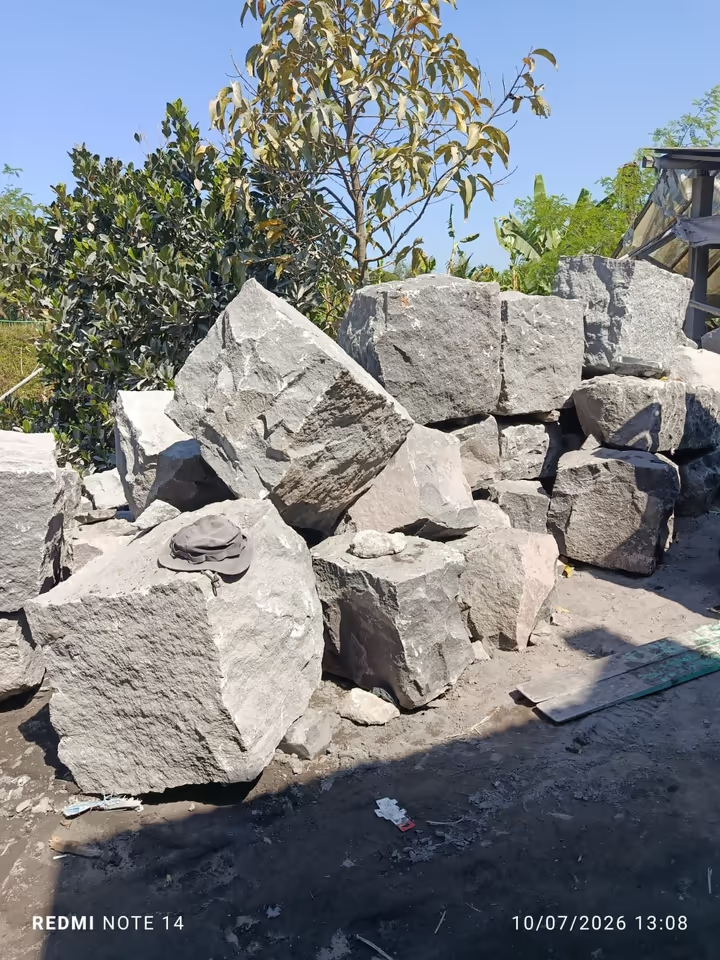
Raw block reference
Large volcanic stone blocks establish the starting material visible in the owner-supplied photograph. Source identity and lot relationship still require written records.
MERAPIMaterial process
A transparent process story built only from the material stages visible in the supplied photographs—and explicit about what those photographs cannot prove.

01Observed stages
The images support a block-to-cut-stone narrative. Capacity, equipment ownership, tolerances, output rate and export history remain unverified unless current records are supplied.
Large volcanic stone blocks establish the starting material visible in the owner-supplied photograph. Source identity and lot relationship still require written records.
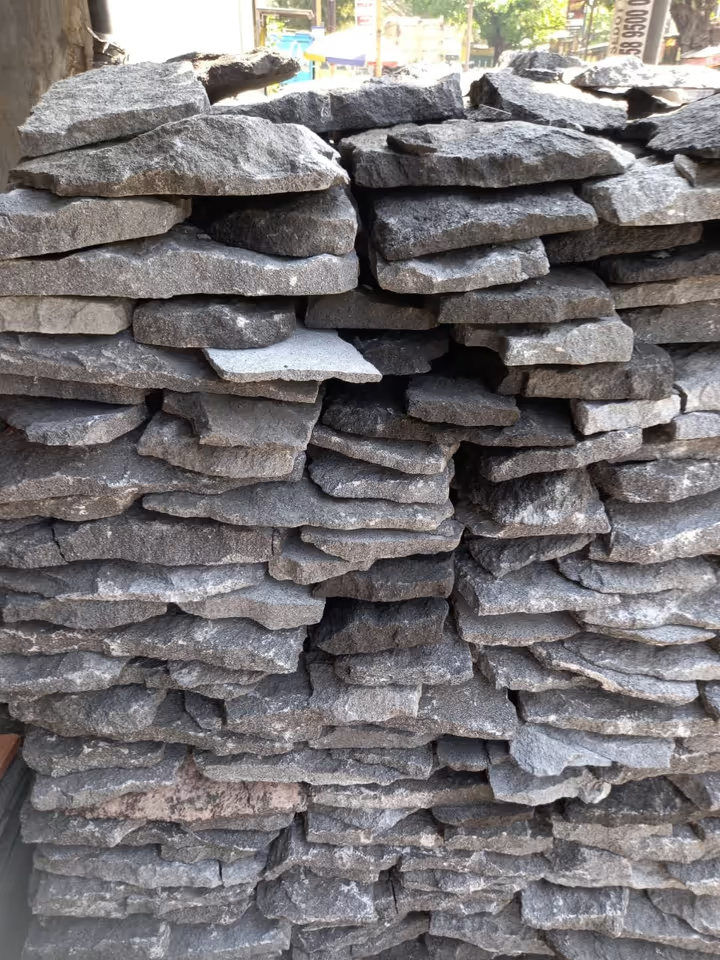
The stone is shown in thinner irregular pieces. Thickness range, structural soundness, usable yield and grading are not inferred from this image.
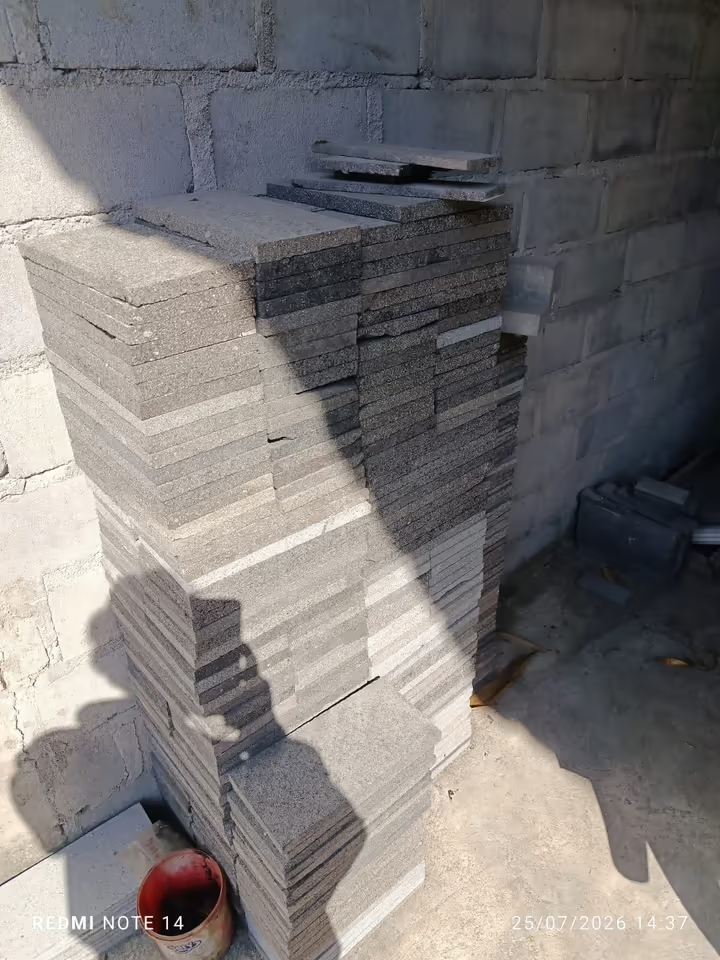
Cut tiles are stacked after shaping. A purchase specification must still state nominal geometry, tolerance, edge, surface, sorting and acceptance rule.
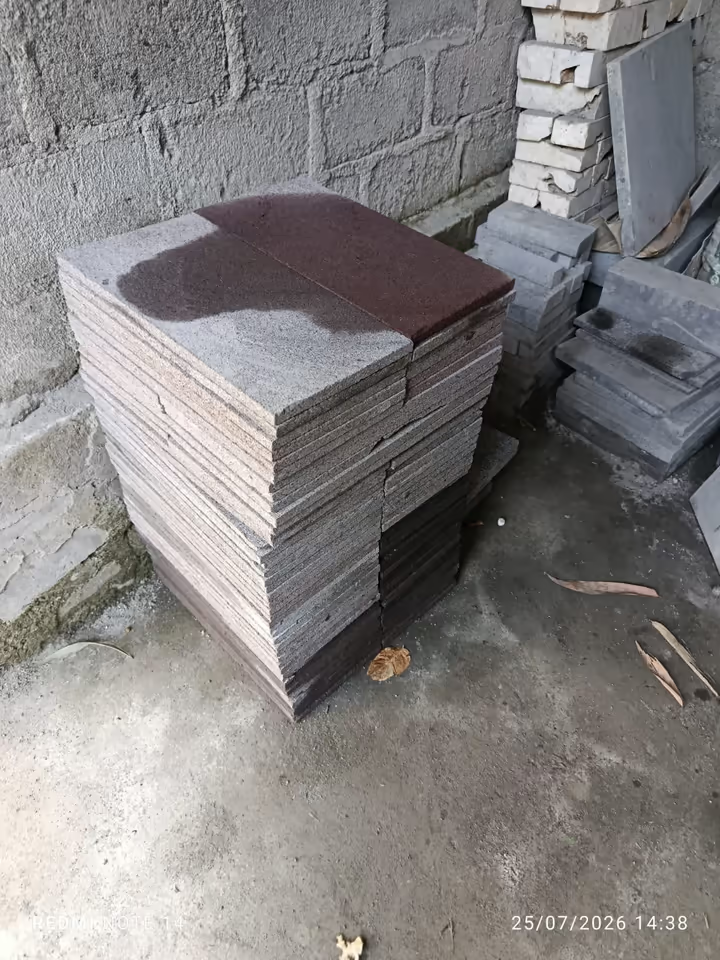
Dry and wet visual references help discuss tone and texture. A photograph does not replace a buyer-approved sample or performance testing for the intended installation.
02Approval gates
NEXTBuyer action
The product page provides a field-by-field specification table and a structured enquiry that opens in WhatsApp.
Build the stone brief